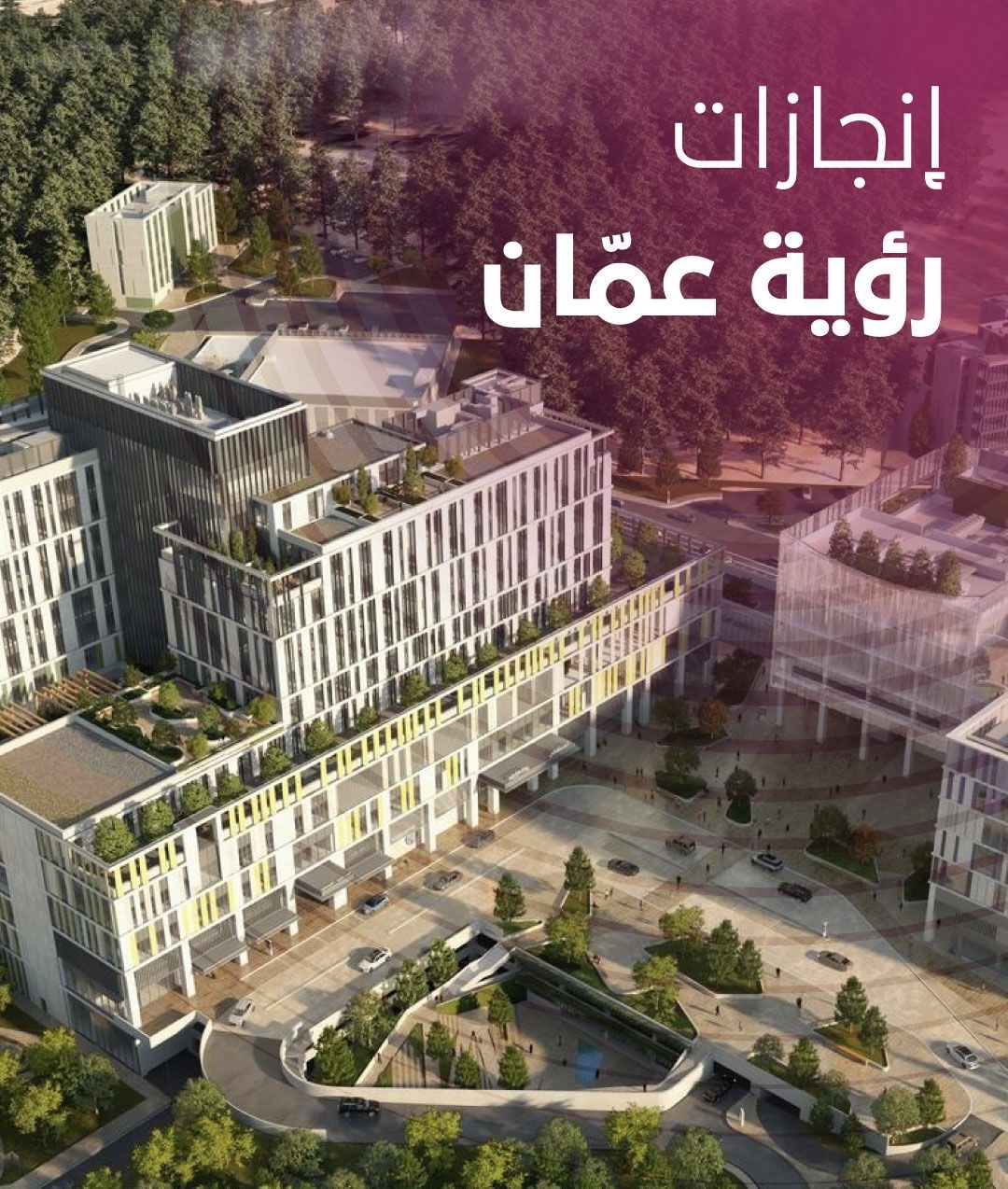
He said: "The Municipality is firmly convinced that it holds very substantial assets, whether land or property, and these must be invested properly, away from bureaucratic routes that repel investment," explaining that the Municipality had established an investment arm, Amman Vision Investment Company, to prepare economic feasibility studies for many projects with a view to offering them as investment opportunities.
He added, during a meeting held on Wednesday by the Jordanian European Business Association (JEBA), that the Municipality had turned to investment in view of the challenges facing its budget as a result of economic conditions, with the aim of strengthening its financial revenues away from fees and taxes by activating and investing its assets. He affirmed that there are genuine opportunities that will be reflected in revenues, help create jobs and enhance development gains.
He noted that the Municipality's investment approach takes market needs into account for 80 per cent of projects, which must generate a return and financial profit, while 20 per cent of projects will address the city's needs irrespective of profit and loss.
He affirmed that the Municipality had worked to facilitate and simplify many procedures for investors and to encourage and incentivise them by amending the building regulations, reducing fees, and easing and speeding up decision-making. He pointed to a new professional licensing law that had been approved and was expected to be presented to the coming parliamentary session, in addition to the law specific to the Greater Amman Municipality and many other pieces of legislation that had been developed.
During the meeting, attended by JEBA members, a number of business owners, foreign ambassadors and diplomats, Dr. Al-Shawarbeh noted that the Greater Amman Municipality is working to reclaim pavements across various locations in the capital, but that this needs some time given the long distances involved, alongside pedestrian crossings to protect them.
He pointed out that the challenges facing the Municipality's strategy are traffic congestion, bureaucracy and delays in transactions for citizens and investors, and legislation that needs redrafting to suit and align with the modernity of the state and society and the requirements and needs of the future.
He explained that the Municipality had adopted a three-year plan that began the previous year and ends in 2020, with the exception of the timeframe linked to operating the Bus Rapid Transit system, which will fall in the second half of 2021.
Dr. Al-Shawarbeh explained that the Municipality had set out several tracks to begin tackling traffic congestion, the first being to accelerate the infrastructure works for the Bus Rapid Transit system, due to be completed at the end of 2020, with the exception of the Tariq junction, which would be completed in mid-2021 because of a delay in issuing the tender, alongside raising the efficiency of public transport in the capital through the establishment of a company owned by the Municipality.
He also addressed the digital transformation programme the Municipality has been implementing since the beginning of the year, aimed at simplifying procedures, speeding up decision-making and strengthening impartiality, integrity and transparency.
The President of the Jordanian European Business Association (JEBA), Eng. Jamal Badran, affirmed that JEBA's board of directors is keen to implement many projects and initiatives in the coming period that serve the national economy, promote investment and boost Jordanian exports to European markets.
During the meeting, Badran praised the tangible efforts and achievements of the Municipality in improving services in the capital and presenting it as an advanced and sustainable city.
He explained that JEBA would, in the coming period, hold open meetings between the association's members and the economic attachés at the Bulgarian and Dutch embassies, with the aim of exploring opportunities to strengthen bilateral cooperation and providing members with business and investment opportunities in those countries, as well as reviewing the difficulties and challenges they face in dealing with them.
He explained that the association would organise a visit by a Jordanian economic delegation to Slovenia and Croatia the following month, as part of efforts to strengthen mutual trade and investment between Jordanian businesspeople and their counterparts in European Union countries.